 EN

As sports training becomes increasingly scientific and competitive, recovery has become an essential part of athletic performance management. Professional sports teams, fitness facilities, athletic training centers, and rehabilitation clinics are placing greater emphasis on structured recovery programs to support athletes between training sessions and competitions.
Among the technologies gaining attention is compression therapy, particularly sequential pneumatic compression. By applying controlled air pressure through multi-chamber compression sleeves, these systems provide a structured compression experience and have become an increasingly recognized option in modern sports recovery environments.
For sports recovery centers looking to expand their service capabilities, understanding how compression therapy works, where it fits into recovery programs, and how to select suitable equipment is an important step toward building a professional recovery service.
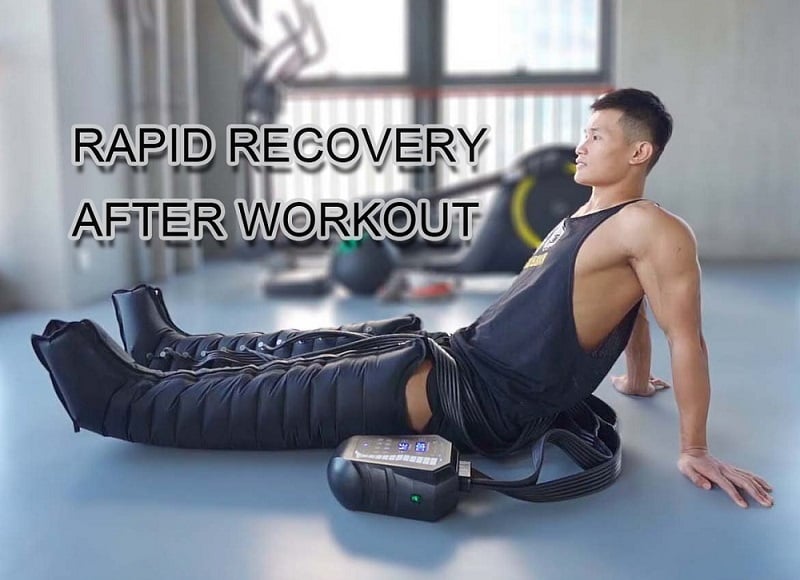
Compression therapy uses controlled external pressure to compress specific areas of the body. In pneumatic compression systems, an air pump delivers air into multiple chambers inside specialized sleeves, creating a programmed compression and release sequence.
Unlike conventional compression garments that provide relatively continuous pressure, sequential pneumatic compression devices can deliver adjustable pressure patterns through independently controlled chambers.
Depending on the equipment configuration, compression sleeves may cover the legs, arms, waist, or other body areas.
For sports recovery centers, air compression therapy systems offer a technology-based option that can be incorporated into structured post-training recovery services.
Key features of pneumatic compression therapy include:
Sequential multi-chamber air compression
Adjustable pressure levels and treatment durations
Multiple operating modes for different compression sequences
Interchangeable sleeves for different body areas
Plug-in and rechargeable equipment options
These features allow facilities to select equipment configurations according to their service models, available space, and user requirements.
Sports recovery centers serve different types of users, from recreational fitness enthusiasts to professional athletes. Pneumatic compression systems can be integrated into several service settings.
After demanding training sessions, athletes often include rest, hydration, stretching, and other recovery practices in their routines.
Air compression systems can be incorporated as an additional recovery service. Sequential compression sleeves apply controlled pressure to the selected body area, providing a structured compression experience during designated recovery sessions.
Leg compression boots are particularly relevant to facilities that provide lower-limb recovery services.
Professional training facilities need recovery equipment that can accommodate different users and training schedules.
Multi-chamber compression devices with adjustable pressure and operating modes offer flexibility for structured recovery sessions.
Facilities may consider equipment with:
Multiple pressure settings
Adjustable session timers
Independent chamber control
Different sleeve sizes and configurations
Easy-to-operate control interfaces
These functions help staff organize equipment usage according to facility procedures and individual user requirements.
Fitness clubs are increasingly expanding beyond traditional exercise services by introducing dedicated recovery areas.
Compression therapy equipment can complement services such as stretching areas, massage facilities, and relaxation spaces.
Portable air compression devices are particularly useful for facilities with limited space or multiple service areas.
Rechargeable models can also provide greater flexibility when electrical outlets are not conveniently located.
Some sports rehabilitation centers provide supervised recovery and physical therapy services for individuals returning to physical activity.
Pneumatic compression equipment may be considered as an adjunct option when its intended use, regulatory status, and individual suitability are consistent with the facility's clinical protocols.
Equipment selection should be based on the manufacturer's approved intended purpose and the professional judgment of qualified clinicians.
It is important to distinguish general sports recovery services from medical treatment. Not every compression device is approved for every clinical application.
The effectiveness and flexibility of an air compression system depend partly on its chamber configuration and control technology.
A multi-chamber compression system divides the sleeve into several inflatable sections. The controller regulates how these sections inflate and deflate according to the selected operating program.
Sequential compression: Different chambers inflate in a programmed sequence, creating a controlled compression pattern.
Adjustable pressure: Users can select from available pressure settings within the device's specified operating range.
Multiple operating modes: Different programs offer alternative compression sequences and operating patterns.
Flexible sleeve configurations: Interchangeable sleeves allow one device platform to accommodate different body areas, depending on the model.
For sports recovery centers, these functions provide more options when designing equipment configurations for different service requirements.
Not all pneumatic compression devices offer the same capabilities. Before purchasing equipment, facility operators and distributors should evaluate several important factors.
The number of air chambers affects the compression zones and control options available.
Common configurations include 4-chamber, 6-chamber, 8-chamber, and 12-chamber systems.
Facilities should select the chamber configuration according to their intended applications, operating requirements, and equipment budget.
Adjustable pressure settings and multiple compression modes provide operational flexibility.
However, a wider pressure range or a greater number of modes does not automatically mean that a device is suitable for every user. Settings should remain within the manufacturer's specifications and applicable professional guidance.
Sleeve options are an important consideration for facilities serving different user groups.
Depending on the product model, available configurations may include:
Leg compression boots
Full-length compression pants
Arm compression sleeves
Waist compression garments
Full-body compression suits
Before purchasing, operators should confirm compatibility between the control unit, connecting tubes, and selected sleeves.
Both power configurations have practical advantages.
Plug-in compression systems are suitable for fixed recovery stations where equipment is used regularly in designated locations.
Rechargeable models offer greater portability and may be more convenient for mobile recovery services, shared training spaces, and facilities that need flexible equipment placement.
For sports recovery equipment distributors and facility operators, choosing a capable manufacturer is just as important as selecting the product itself.
Important evaluation criteria include:
Manufacturing experience and production capacity
Product quality management systems
Applicable product certifications and regulatory documentation
Technical support and after-sales service
OEM and ODM customization capabilities
Stable component and accessory supply
A reliable manufacturing partner can help distributors develop product portfolios that better match their target markets.
Xiamen Weiyou Intelligent Technology Co., Ltd. (VU) is a manufacturer specializing in intelligent rehabilitation and medical care equipment, with product development and manufacturing capabilities in pneumatic compression therapy systems and related technologies.
With more than 16 years of manufacturing experience, a production facility exceeding 20,000 square meters, and a dedicated R&D team, VU provides OEM and ODM solutions for international distributors, healthcare equipment suppliers, and business partners.
VU's air compression therapy product portfolio includes different chamber configurations, power options, and sleeve combinations to accommodate varying equipment requirements.
Representative product configurations include:
Multi-Chamber Compression Systems
VU offers 6-chamber, 8-chamber, and 12-chamber pneumatic compression systems, providing different compression configurations for professional equipment buyers.
Rechargeable and Portable Designs
Selected models feature rechargeable batteries, supporting flexible equipment placement and portable applications.
Multiple Sleeve Options
Depending on the model, customers can select leg boots, arm sleeves, waist garments, or full-length compression pants.
Adjustable Operating Functions
Selected systems provide multiple operating modes, adjustable pressure levels, and programmable session durations.
OEM & ODM Manufacturing Services
VU supports customization options including product appearance, logo, packaging, user manuals, sleeve configurations, and selected functional specifications, subject to model design and technical feasibility.
For buyers evaluating compression therapy equipment for sports recovery facilities, VU provides a range of manufacturing options for developing market-specific product solutions.
Product selection should always follow the applicable product labeling, intended use, and regional regulatory requirements. Medical applications should only be considered where supported by the relevant product authorization and clinical judgment.
As recovery becomes a more visible part of the fitness and sports industry, dedicated recovery services offer opportunities for facility operators and equipment distributors.
Compression therapy equipment can help businesses develop differentiated service offerings and build dedicated recovery areas.
Potential business opportunities include:
Sports performance and athletic training centers
Premium gyms and fitness clubs
Professional sports team facilities
Sports rehabilitation clinics
Physical therapy equipment distributors
Wellness and recovery service providers
For distributors, working with an experienced OEM/ODM manufacturer can also provide opportunities to develop private-label product lines and build long-term regional business partnerships.
Q1: What is the difference between compression garments and pneumatic compression devices?
Compression garments generally provide continuous external pressure, while pneumatic compression devices use inflatable chambers to deliver programmed pressure cycles.
Q2: Which compression system is suitable for a sports recovery center?
The appropriate system depends on the facility's service requirements, sleeve configurations, chamber design, operating functions, and applicable intended use. Multi-chamber systems offer different compression configurations for professional equipment buyers to evaluate.
Q3: Are rechargeable compression therapy devices suitable for sports facilities?
Rechargeable models may be suitable for facilities that require portable equipment or flexible placement. Battery capacity, charging time, operating duration, and product specifications should be evaluated before purchasing.
Q4: Can one compression machine support different body areas?
Selected models support interchangeable sleeves for different body areas, such as the legs, arms, and waist. Compatibility depends on the specific device model and accessories.
Q5: Does VU provide OEM and ODM compression therapy equipment?
Yes. Xiamen Weiyou Intelligent Technology Co., Ltd. provides OEM and ODM services, including logo, appearance, packaging, sleeve configuration, and selected product specifications, subject to technical feasibility and order requirements.
Q6: What should distributors check before importing compression therapy equipment?
Distributors should verify product specifications, applicable certifications, intended-use documentation, labeling requirements, quality management systems, warranty terms, and after-sales support for their target markets.
Compression therapy is becoming an increasingly relevant equipment option in modern sports recovery environments. With multi-chamber compression technology, adjustable operating functions, and flexible sleeve configurations, pneumatic compression systems offer facilities another way to develop structured recovery services.
For sports recovery center operators, the key is to select equipment that matches their service requirements and user needs. For distributors, partnering with an experienced manufacturer can provide additional flexibility in product development, customization, and market expansion.
As a professional intelligent rehabilitation and medical care equipment manufacturer, VU is committed to providing flexible OEM and ODM compression therapy solutions for global business partners.
Contact VU to explore pneumatic compression equipment options and discuss your private-label or regional distribution opportunities.(our email: [email protected])