 EN
EN

As rehabilitation clinics expand their services for mobility recovery, edema management, and long-term patient care, compression therapy equipment is becoming an increasingly useful technology within multidisciplinary rehabilitation programs. Intermittent pneumatic compression (IPC) devices can provide controlled, sequential compression and may serve as an adjunct to other rehabilitation and compression-based interventions when appropriately selected and clinically supervised.
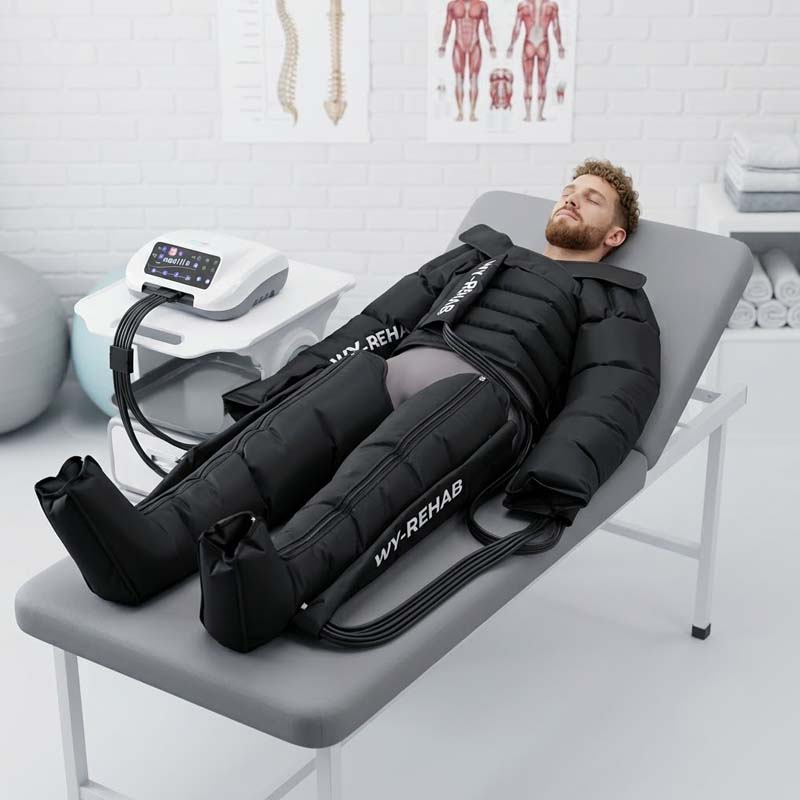
Rehabilitation is rarely limited to a single treatment method. Depending on the patient's condition, a rehabilitation program may combine therapeutic exercise, manual techniques, mobility training, compression garments, skin care, and other supportive interventions.
Compression therapy can play a role in this broader treatment framework, particularly when clinicians are managing patients with limb swelling or conditions in which edema is an important rehabilitation consideration.
Intermittent pneumatic compression devices use air-filled chambers to apply controlled external pressure to a limb or other treatment area. The chambers can inflate and release sequentially, creating a dynamic compression pattern rather than maintaining a single constant pressure.
Clinical literature has investigated IPC as an adjunctive approach for lymphedema and edema management. A recent systematic review of randomized controlled trials reported moderate-certainty evidence that IPC can reduce lower-limb edema volume, although differences among treatment protocols and study designs remain important considerations.
This means compression therapy equipment should generally be viewed as one component of a rehabilitation strategy rather than a replacement for clinical assessment or other therapies.
Edema can occur in patients with limited mobility, lymphatic dysfunction, venous conditions, postoperative changes, or other clinical situations. Persistent swelling may affect movement, comfort, and participation in rehabilitation activities.
For appropriately selected patients, pneumatic compression may help support edema management as part of a broader clinical program.
A randomized clinical study involving patients with reduced mobility and lower-limb edema found that an IPC intervention was associated with reductions in edema measurements and improvements in ankle range of motion.
For rehabilitation clinics, this creates an opportunity to integrate compression therapy equipment into treatment pathways where controlled compression is clinically appropriate.
One important characteristic of an intermittent pneumatic compression device is its multi-chamber design.
Instead of applying pressure to the entire treatment area simultaneously, multi-chamber systems can inflate different chambers sequentially. Depending on the device configuration, clinicians can select different pressure levels, treatment times, and compression modes.
This makes pneumatic compression systems adaptable to different clinical workflows.
For example, a rehabilitation clinic may use a multi-chamber compression system with a leg sleeve for lower-limb applications, while other configurations may accommodate the arm, waist, or multiple treatment areas.
The exact pressure, treatment duration, chamber sequence, and treatment area should be determined according to the device instructions and the patient's individual clinical situation.
Lymphedema management commonly involves a combination of interventions rather than a single device.
The established concept of complete or complex decongestive therapy can include compression, manual lymphatic drainage, exercise, and skin care. IPC may be incorporated as an adjunct in selected patients, particularly when mobility or exercise capacity is limited.
This makes pneumatic compression therapy equipment potentially useful within rehabilitation clinics that provide multidisciplinary lymphedema services.
Importantly, clinical assessment remains essential. The appropriate treatment protocol depends on factors such as the patient's condition, treatment goals, contraindications, and response to therapy.
Modern rehabilitation clinics often serve patients with different treatment requirements. A versatile compression therapy system can therefore be useful when it supports multiple treatment configurations.
Potential clinical environments include:
Different sleeve configurations can also allow one compression therapy platform to support multiple treatment areas.
For B2B buyers, this flexibility can be particularly relevant when evaluating professional compression therapy equipment for multi-purpose rehabilitation facilities.
Xiamen Weiyou Intelligent Technology Co., Ltd. develops and manufactures intelligent rehabilitation, physiotherapy, and nursing equipment under the VU brand.
Its air compression therapy portfolio includes different configurations designed around multi-chamber pneumatic compression technology.
For example, the VU-IPC06 is an 8-chamber intermittent pneumatic compression system designed with multiple treatment modes, adjustable pressure, and timer settings. Its multi-chamber structure allows sequential compression across the treatment area, while compatible sleeves can support different application configurations.
The VU-IPC12 uses a 12-chamber configuration and is designed with individually adjustable chambers. A long compression-pants configuration can provide coverage across the lower body, making it a potential option for rehabilitation facilities looking for a broader-area pneumatic compression system.
Other VU configurations include 4-, 6-, 8-, and 12-chamber systems, with different sleeve options such as leg compression boots, arm sleeves, waist sleeves, compression jacket, compression pants, and full-body configurations.
These product variations allow rehabilitation equipment distributors and clinical buyers to select configurations according to their intended applications and market requirements.
Selecting a compression therapy machine should involve more than comparing the number of chambers or maximum pressure.
Rehabilitation professionals and equipment purchasers may consider:
Different chamber numbers provide different compression patterns and treatment configurations. Multi-chamber systems can offer more segmented control.
Adjustable pressure allows treatment parameters to be selected according to the device's intended use and clinical requirements.
Multiple compression programs can provide greater flexibility for different treatment protocols.
Interchangeable leg, arm, waist, and other sleeves can make a pneumatic compression system more versatile within a clinic.
A straightforward controller and clearly defined treatment parameters can help integrate the equipment into routine clinical workflows.
Medical device buyers should verify the applicable certifications, intended use, technical documentation, labeling, and regulatory status for the specific model and target market.
For distributors and rehabilitation equipment brands, customization capability can also be important. Options may include appearance, sleeve configuration, pressure range, operating modes, controller design, branding, packaging, and other market-specific requirements.
One of the most important considerations is understanding the appropriate role of pneumatic compression.
Evidence supports the use of IPC in selected clinical situations, but research also highlights differences in treatment protocols and patient populations. A 2024 scoping review noted that questions concerning the safety, efficacy, and appropriate application of newer IPC technologies remain relevant.
Therefore, rehabilitation clinics should use compression therapy equipment according to the manufacturer's instructions, applicable clinical guidance, and professional assessment.
For patients with lymphedema or edema, compression therapy may be incorporated alongside other interventions rather than replacing exercise therapy, manual techniques, compression garments, skin care, or other components of an individualized rehabilitation plan.
As rehabilitation becomes increasingly personalized, equipment manufacturers are developing compression systems with more chambers, adjustable parameters, multiple sleeve configurations, portable designs, and different control options.
For rehabilitation clinics, the value of compression technology is not simply the ability to generate air pressure. The more important consideration is how the equipment can be integrated into a structured, patient-specific rehabilitation pathway.
From a B2B perspective, this also creates opportunities for medical device distributors, physiotherapy equipment suppliers, rehabilitation brands, and regional agents looking for configurable air compression therapy equipment.
With multiple chamber configurations, treatment-area options, and OEM & ODM capabilities, VU provides compression therapy equipment solutions for businesses seeking to develop or expand their rehabilitation product portfolios.
Compression therapy equipment can support rehabilitation clinics by providing controlled intermittent pneumatic compression for selected patients and treatment goals, particularly as part of broader edema and lymphedema management programs.
The growing body of clinical research suggests that IPC can contribute to edema reduction in appropriately selected patients, while also emphasizing the importance of patient selection, treatment parameters, and integration with comprehensive care.
For rehabilitation clinics and B2B healthcare equipment providers, technologies such as intermittent pneumatic compression machines, pneumatic compression devices, air compression therapy systems, lymphedema compression pumps, compression boots, compression sleeves, and multi-chamber compression systems can form part of a broader rehabilitation equipment portfolio.
VU | Xiamen Weiyou Intelligent Technology Co., Ltd. provides OEM & ODM solutions for intelligent rehabilitation and physiotherapy equipment, supporting distributors, medical equipment brands, and regional partners with configurable compression therapy products.