 EN
EN

Imagine waking up in the morning and trying to reach for a glass of water, but your fingers won't obey you; typing on a keyboard at work becomes a painful battle; even simple everyday tasks like tying shoelaces require help. For patients with hand injuries, this sense of powerlessness permeates almost every corner of life. The hand, this tool we take for granted, has an impact far beyond imagination once injured—it not only occupies nearly a quarter of the control area of our brain's motor cortex, but it is also our primary medium for interacting with the world.
With the development of rehabilitation medicine, an innovative tool is quietly changing the landscape of hand rehabilitation: rehabilitation gloves. What scientific principles underlie these seemingly simple devices? How do they help patients regain control of their lives?
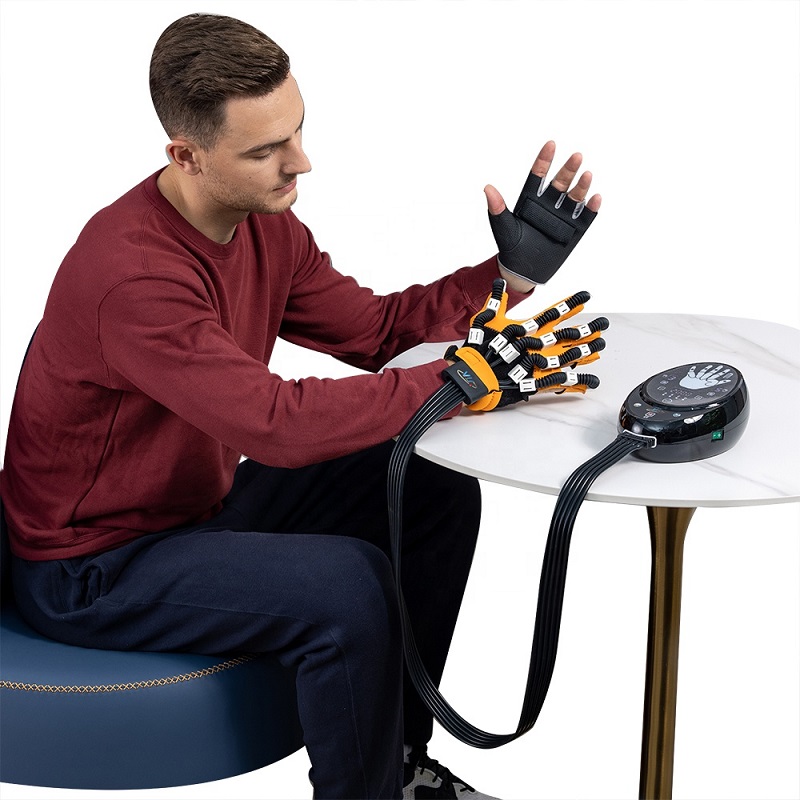
Scientific Principles: When Technology Meets Ergonomics
The design of modern rehabilitation gloves integrates the wisdom of biomechanics, neuroscience, and materials engineering. Their core working principle is based on two key rehabilitation theories: repetitive task training and compulsive use therapy. By providing precise and controllable assisted movement, these gloves help re-establish neural connections between the brain and hand muscles—a process medically termed "neuroplasticity."
For example, smart rehabilitation gloves utilize flexible sensors and micro-drive systems to detect residual electromyographic signals in patients and provide appropriate assistance, achieving a collaborative training model of "patient-led, device-assisted." This design not only enhances training effectiveness but also significantly improves patient engagement and confidence.
Diverse Forms of Rehabilitation Gloves: Targeting Different Recovery Stages
Based on function and technological content, rehabilitation gloves on the market are mainly divided into several categories:
Passive rehabilitation gloves typically use elastic materials or adjustable strap systems to promote lymphatic drainage, reduce edema, and maintain joint range of motion through continuous, gentle pressure. These hand function rehabilitation gloves are particularly suitable for the early postoperative period when active movement is not yet possible.
Active assisted rehabilitation gloves are currently a hot topic in technological development. Taking pneumatically driven rehabilitation gloves as an example, they simulate natural hand movements through a precise pneumatic control system, providing patients with movement support ranging from slight to full. These devices allow therapists to precisely adjust the level of assistance based on recovery progress, enabling personalized rehabilitation plans.
Sensor-integrated rehabilitation gloves represent the cutting edge of technology. These devices incorporate multiple motion sensors and pressure feedback systems, enabling real-time monitoring of training data and wireless transmission to the therapist's monitoring platform. Based on this data, rehabilitation plans can be dynamically adjusted to maximize rehabilitation efficiency.
When are rehabilitation gloves needed? Identify key indications
Rehabilitation gloves are suitable for various hand dysfunctions:
Hexagonal hand paralysis after stroke or brain injury.
Surgery after hand tendon repair.
Functional recovery after arthritis or joint replacement.
Peripheral nerve injury (e.g., carpal tunnel syndrome, ulnar nerve injury).
Spinal cord injury affecting hand function.
Post-traumatic hand stiffness and edema.
Studies have shown that systematic training with rehabilitation gloves during the "golden recovery period" of 3-6 months after injury can significantly improve the degree and speed of functional recovery. Even for patients in the chronic phase, continued use can lead to functional improvement and enhanced quality of life.
The Practical Effects of Rehabilitation Gloves: Hope Behind the Data
Clinical research provides encouraging evidence: a randomized controlled trial of stroke patients showed that patients using smart hand rehabilitation training gloves experienced an average 28% improvement in their upper limb Fugl-Meyer scores (a commonly used tool for assessing motor function), compared to only a 12% improvement in the non-use group. More importantly, the improvement in daily living abilities was more significant in the use group.
“The biggest advantage of rehabilitation gloves is that they extend centralized hospital rehabilitation to the home environment,” points out Dr. Wang, director of the Hand Function Rehabilitation Center at Beijing Rehabilitation Hospital. “Patients can develop home training plans under the guidance of therapists, achieving several hours of repetitive training daily through rehabilitation gloves that can be used at home, whereas traditional outpatient rehabilitation typically only involves a few times a week, for tens of minutes each time.”
How to Choose the Right Rehabilitation Gloves?
When choosing rehabilitation gloves, several key factors need to be considered:
Fit: The gloves should conform to the contours of the hand, distribute pressure evenly, and not restrict blood circulation.
Functionality: Choose the appropriate functional level based on the recovery stage.
Data tracking: Prioritize products that provide training data feedback.
Comfort: The material should be breathable, hypoallergenic, and suitable for extended wear.
Professional guidance: Ensure use under the assessment and guidance of a rehabilitation therapist.
Leading hand function rehabilitation training devices on the market, such as the "FlexHand Smart Rehabilitation Glove System," offer a complete solution from assessment and program development to home training and data monitoring, extending professional rehabilitation to the patient's home.
Future outlook: A new chapter in intelligent rehabilitation.
With the development of flexible electronics, artificial intelligence, and virtual reality, the next generation of rehabilitation gloves will be more intelligent and personalized. Some cutting-edge products have already attempted to combine VR hand rehabilitation training with gloves, increasing patient engagement through gamified training scenarios. Artificial intelligence algorithms can analyze each patient's movement patterns, providing truly personalized "adaptive" rehabilitation programs.
Hand rehabilitation is a path that requires patience, scientific methods, and appropriate tools. Rehabilitation gloves, as an important tool in modern rehabilitation medicine, are helping countless patients reconnect with the world in a unique way—a handshake, a stroke of the pen, the joy of regaining independence. On this path to recovery, technology is no longer cold and impersonal, but rather a gentle force, supporting every hope of regaining independence.
If you or someone you care about is experiencing the challenges of hand function recovery, consider consulting a rehabilitation specialist to see if rehabilitation gloves are suitable for your recovery plan. Regaining hand function often begins with a simple exploration.