 EN
EN

Anyone who has undergone surgery knows that the real ordeal often begins the moment they leave the operating room. Intense postoperative pain, persistent swelling, and a long and arduous recovery period are hurdles every patient must face. Traditionally, the approach involves applying ice packs, bandaging, and passively waiting for recovery.
However, if you've been following developments in orthopedics or sports medicine recently, you'll have noticed a significant change: more and more surgeons are recommending a device dubbed "rehabilitation black technology"—the hot and cold compression therapy machine. This reflects not only technological advancements but also an upgrade in clinical decision-making based on substantial evidence-based medicine.
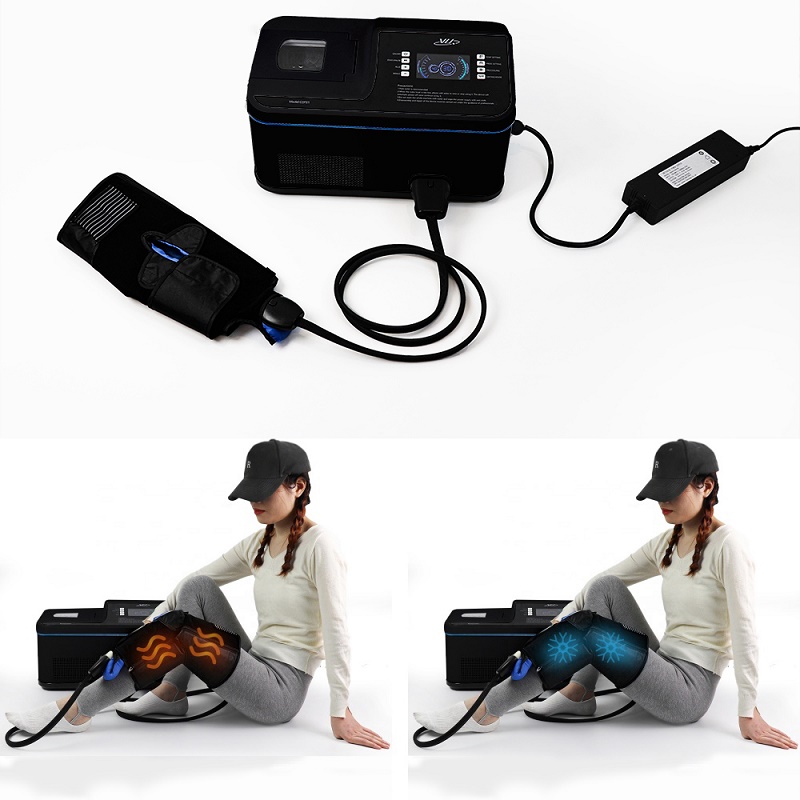
Today, we'll take the VU-COT01 semiconductor automatic hot and cold compression therapy machine, a star product from Xiamen Weiyou Intelligent Technology Co., Ltd., as an example to explore why modern surgical rehabilitation cannot function without this device.
Limitations of Traditional Ice Packs: Unstable "Physical Attack"
Clinically, traditional ice pack application presents many uncertainties. A mixture of ice and water may initially be too cold, causing skin irritation, and then rapidly warm up after 15 minutes, losing its effectiveness. Such drastic temperature fluctuations not only affect the analgesic effect but also have little effect on reducing inflammation in deep tissues. More importantly, traditional ice packs cannot provide continuous and controllable pressure, which is crucial for combating postoperative edema.
Why is "cold" + "compression" the golden combination?
The latest clinical research provides strong support for the "cold-compression combination." A 2024 study published in *Pain Management Nursing* on total knee replacement (TKA) showed that patients using compression cold bandages (providing 30 mmHg pressure) had significantly lower postoperative pain scores (VAS) in the first 36 hours compared to patients using only cold gel. The study clearly indicates that 20 minutes of cold therapy combined with 30 mmHg pressure may be one of the most effective parameters for postoperative analgesia.
Furthermore, a 2024 controlled study on rehabilitation after anterior cruciate ligament (ACL) reconstruction confirmed that patients using continuous cooling and compression devices showed better pain control and significantly smaller limb circumference (swelling) at two and six-week follow-ups post-surgery compared to patients using traditional ice packs or without ice application.
Surgeons favor devices like cryo-compression therapy machines because they transform traditional "passive recovery" into precise "active treatment."
Temperature Control Technology: The Clinical Value of VU-COT01
In this field, the VU-COT01 semiconductor automatic cryo-compression therapy machine, launched by Xiamen Weiyou Intelligent Technology Co., Ltd., perfectly meets the stringent requirements of modern surgical rehabilitation.
1. Precise "Targeted" Cooling
Studies indicate that to optimize cryotherapy effects, skin temperature needs to be reduced to the treatment range of 10-15℃. VU-COT01 iceless cold therapy machine abandons the traditional physical cooling method of ice packs, employing advanced semiconductor temperature control technology to maintain a constant water temperature within the user's set value. This constant temperature and flow characteristic ensures that the cold energy continuously penetrates to the deep joint, avoiding a sudden drop in temperature and effectively reducing tissue exudation and inflammation.
2. Circulating Compression: More Than Just Bandaging
Simply applying cold compresses only constricts blood vessels, but combining it with a pressure gradient is necessary to "squeeze out" the swelling and fluid buildup. The VU-COT01 hot and cold compression therapy device uses automated air pressure circulation to simulate the action of a muscle pump. This intermittent compression not only prevents deep vein thrombosis but also significantly accelerates lymphatic drainage. As emphasized in the meta-analysis comparing the effects of compression cryotherapy and traditional cryotherapy after shoulder arthroscopy, compression cryotherapy is comprehensively superior to traditional cryotherapy in terms of analgesia and swelling reduction at 24 and 48 hours post-surgery.
3. Alternating Hot and Cold Therapy: Unlocking a New Pathway to Rapid Recovery After Surgery (ERAS)
Unlike simple cryotherapy devices, a major highlight of the VU-COT01 is its automatic alternating hot and cold therapy function. After the acute inflammatory phase (usually 48-72 hours post-surgery), the focus of rehabilitation shifts to hematoma absorption and tissue healing. At this point, the device can switch to heat therapy mode, accelerating repair by promoting local blood circulation. This full-cycle coverage of "acute phase cooling and recovery phase heating" on a single device eliminates the need for patients to purchase multiple devices, a key reason why surgeons value it as a "full-cycle rehabilitation companion."
More than just comfort, it's an investment in prognosis.
Surgeons recommend devices like the VU-COT01 semiconductor automated cryo-thermal compression therapy machine for another economic consideration: shortening hospital stays and reducing the risk of complications.
With traditional ice packs, patients need to get up frequently to change them, affecting rest and potentially leading to dressing slippage or frostbite. The VU-COT01's automated circulation system allows patients to truly "recover while lying down." Patients can begin painless functional exercises earlier during their hospital stay, reaching discharge criteria faster. A 2024 study on knee replacement surgery showed that effective compression cryotherapy is an indispensable part of the Enhanced Recovery After Surgery (ERAS) pathway, directly impacting patients' early mobility and pain scores at discharge.
As the medical philosophy shifts from simply "treating disease" to "optimizing function," postoperative rehabilitation equipment is undergoing a profound transformation. Surgeons are no longer content with ice packs and towels because they understand that precise intervention in the first few hours after surgery determines a patient's joint function and quality of life for months to come.
Xiamen Weiyou Intelligent Technology Co., Ltd.'s VU-COT01 cold compression therapy machine, with its precise temperature control through semiconductor refrigeration technology and unique alternating hot and cold therapy, not only provides patients with a comfortable rehabilitation experience but also offers a scientific path to rapid and safe recovery.
If you or a family member is facing elective surgery, consider consulting your doctor about whether an automatic hot & cold compression therapy machine could be considered to optimize your rehabilitation plan. In today's era of deep integration between technology and medicine, choosing the right tools can often make the recovery process much more efficient.